
🛹 Skateboard Emoji

Emoji
🛹 Emoji Information
- Name:
- Skateboard
- Shortcode:
- :skateboard:
- Software Shortcodes:
-
:skateboard: ( Github, Discord, Slack )
- Keywords:
- board, skateboard
- Category:
- Travel & Places » Transport Ground
- Introduced:
- 2018 ( Unicode 11.0 )
- Unicode Codepoint(s):
-
🛹U+1F6F9
- Modifier:
- Not Available
🛹 Skateboard Meaning
The skateboard emoji typically represents concepts related to skateboarding and its associated culture. Skateboarding has long been a symbol of youth rebellion, freedom, and urban lifestyle. As such, the skateboard emoji often conveys messages of adventure, daring, and individuality. When people use this emoji, they might be talking about actual skateboarding, sharing their passion for the sport, or referencing broader themes of creativity, independence, and nonconformity.
In a broader context, the skateboard emoji can also signify a laid-back, casual attitude. Skateboarding itself is often associated with a relaxed, easygoing demeanor, which can be communicated through the use of this emoji. For instance, someone might use the skateboard emoji to suggest that they're "rolling with the punches" or taking things in stride. This can extend to scenarios that involve chilling out, not taking life too seriously, or just going along with the flow.
Furthermore, the skateboard emoji can be a part of digital conversations about trends, lifestyle, and fashion. Skateboarding has not only influenced sports but also music, clothing, and urban culture. Thus, the emoji might appear in contexts that are discussing or depicting the latest skateboarding gear, streetwear fashion, or even music genres like punk rock or hip-hop that have been closely tied to skateboarding communities. Through this broad array of associations, the skateboard emoji serves as a versatile symbol that can encapsulate a specific sport or broader cultural ideas.
The skateboard emoji was introduced in 2018 and released as part of the Unicode 11.0 standard. This emoji can be found under the travel and places category. Because the skateboard emoji has been around for quite some time, it should display correctly in the majority of operating systems.
🛹 Examples and Usage
Here are some practical examples of how this emoji can be used in various conversations, social media posts, or messages. These sentences provide context to highlight the emoji's meaning, emotions, and situations it commonly represents. Whether you're expressing your mood, making a statement, or simply adding some fun to your text, these examples can help inspire your own creative use of this emoji. Feel free to adapt or personalize them for your needs!
- Just got a new 🛹! Can't wait to hit the park later today! 🛹🎉
- That trick you did yesterday was awesome! 🛹🔥
- Cruising through the city on my skateboard 🛹 with the best crew! 🚀🤘
- Had a gnarly wipeout today, but still had so much fun 🛹😅🏥
🛹 Emoji on Different Devices
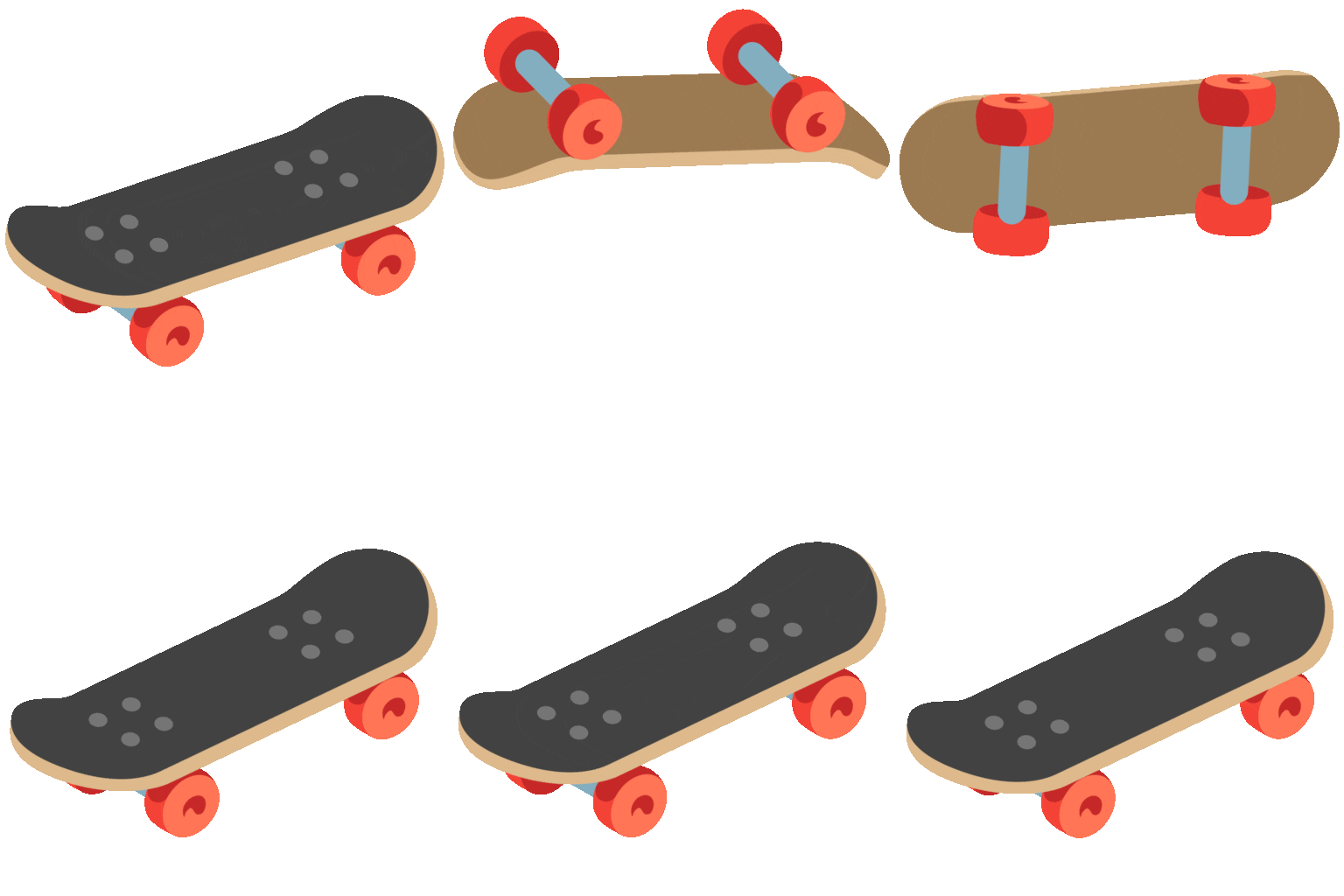
Here, you'll find a variety of emojis showcasing how they appear across different operating systems. Each company designs emojis to reflect their own unique style, meaning the appearance of the same emoji can vary depending on the platform. We've gathered the most popular platforms to give you a glimpse of how these emojis will look on their respective screens.
Keep in mind that depending on the version of the operating system, the emoji images may still look slightly different from what you see here. For your convenience, you can download any of the images by clicking on the symbol next to each one.





🛹 Worldwide Trend
Stay updated with the latest global trends using data from Google Trends. This section provides insights into how frequently emojis are being searched on the web over the past 12 months. Explore the current trends to see which emojis are gaining popularity worldwide.
🛹 Developer Codes
In this section, you'll find the essential codes developers use to integrate and display emojis across various platforms. Whether you're working with HTML, CSS, or other programming environments, these codes will help ensure that the emojis render consistently and correctly in your projects.
- Shortcode:
- :skateboard:
- Software Shortcodes:
-
:skateboard: ( Github, Discord, Slack )
- Hex Code:
-
🛹 - Decimal Code:
-
🛹 - Punycode:
-
xn--i98h - URL Escape Code:
-
%F0%9F%9B%B9 - JavaScript & JSON:
-
\ud83d\udef9 - CSS Code:
-
content: '\1F6F9';